




Creating Simple Daily Routines for Babies and Toddlers
If your days with a baby or toddler feel a bit chaotic, you’re not alone. It’s hard to stay calm when you’re constantly reacting to hunger cues, tiredness, mess, and meltdowns — especially if you’re also trying to keep the house running and meet everyone’s needs.
A simple baby routine or toddler routine doesn’t need to be rigid to be effective. In this post, you’ll learn how to build gentle, flexible parenting routines that bring predictability to your day, support sleep and behaviour, and still leave plenty of room for real life.
Why daily routines help both children and parents
For babies and toddlers, the world is busy, bright, and full of surprises. A steady family routine gives them a sense of safety because they can start to predict what happens next — even if they can’t tell the time yet.
For parents, daily routines reduce decision fatigue. When you’re not constantly asking “What should we do now?”, it’s easier to stay patient, organised, and emotionally steady — which is the foundation of calm parenting.
Daily routines often help with:
- Fewer battles — transitions are easier when they’re familiar (nappy, meal, nap, play).
- Better sleep — a consistent baby sleep routine supports the body clock over time.
- More confidence — children feel secure when their day makes sense to them.
- More time for you — simple anchors in the day make it easier to plan meals, chores, and rest.
- Clearer communication — toddlers cope better when you can say, “First lunch, then play.”
Flexible routines vs strict schedules: what’s the difference?
It’s easy to confuse routines with schedules, and this is where many parents get stuck. A strict schedule is time-led (e.g. nap at 9:30 sharp). A flexible routine is pattern-led (e.g. nap after milk and a short play). The goal is calm predictability, not perfect timing.
A helpful way to think about it is:
- Schedules focus on the clock and can feel stressful when life interrupts.
- Routines focus on the order of events and can flex with your child’s needs.
- A “good” routine is one you can follow on most days without feeling controlled by it.
If you’re aiming for a daily routine for babies or toddlers that supports peaceful family life, start with a sequence you repeat — then let the times float within a realistic window.
Morning routines that encourage calm starts
The morning routine sets the tone for your day, especially if you have an early riser. A calm start doesn’t mean a slow start — it means predictable steps, low friction, and a few small moments of connection.
Keep your morning routine simple and repeatable. For many families, a good flow is “connect, care, then breakfast”.
Try these gentle anchors:
- Light and fresh air — open curtains, step outside for a minute, or look out of a window together to signal “daytime”.
- Connection first — a cuddle, a song, or two minutes on the floor can reduce clinginess later.
- Nappy and wash — same order each day (nappy, hands, face, get dressed).
- Breakfast set-up — keep it boring in the best way: familiar foods, same cup/bowl, minimal choices.
- One small “reset” — a quick tidy of the kitchen or the sleeping area helps you feel more in control.
If mornings feel rushed, consider preparing just one thing the night before (clothes, breakfast bits, or the changing basket). Thoughtful organisation is often the quickest route to a calmer morning.
Feeding, naps and play throughout the day
Most baby routine and toddler routine stress comes from the middle of the day: hunger, tiredness, and stimulation all overlap. A flexible pattern can help you notice what your child needs earlier, so you’re not constantly playing catch-up.
Instead of trying to plan your whole day hour-by-hour, aim for repeating “blocks” that suit your child’s age:
- Feed (milk or meal)
- Play (a mix of connection and independent play)
- Nap / rest (sleep, pram nap, cot nap, or quiet time)
- Reset (nappy, drink, brief tidy, change of scene)
This pattern works as a daily routine for babies and still supports toddlers — the “nap” simply becomes one nap or quiet time as they grow.
Feeding within a routine (without turning it into a battle)
Meals and milk feeds are natural anchors because they happen regularly anyway. The key is consistency in the lead-up, not forcing amounts or timing to the minute.
Helpful habits include:
- Predictable cues — wash hands, sit in the same spot, a short phrase like “It’s time for lunch”.
- Simple choices for toddlers — offer two options you’re happy with (“banana or yoghurt?”).
- Realistic expectations — appetites change daily, especially during teething or growth spurts.
- A gentle end point — when it’s done, it’s done; avoid chasing bites around the house.
This supports a calm family routine while allowing children to listen to their own hunger cues over time.
Naps and the baby sleep routine: keep the wind-down consistent
A baby sleep routine doesn’t need to be long. What matters most is doing the same few steps before sleep so your baby learns, “This means rest is coming.”
For naps, a simple wind-down might be:
- Nappy change
- Sleep sack
- Short cuddle and a repeated phrase (“Time for a nap”)
- Into the cot or pram in a calm, unhurried way
For toddlers, you may swap the sleep sack for the loo/potty and a quick book, but the principle stays the same: predictable steps, low stimulation, and a consistent goodbye.
Play that supports calm and independence
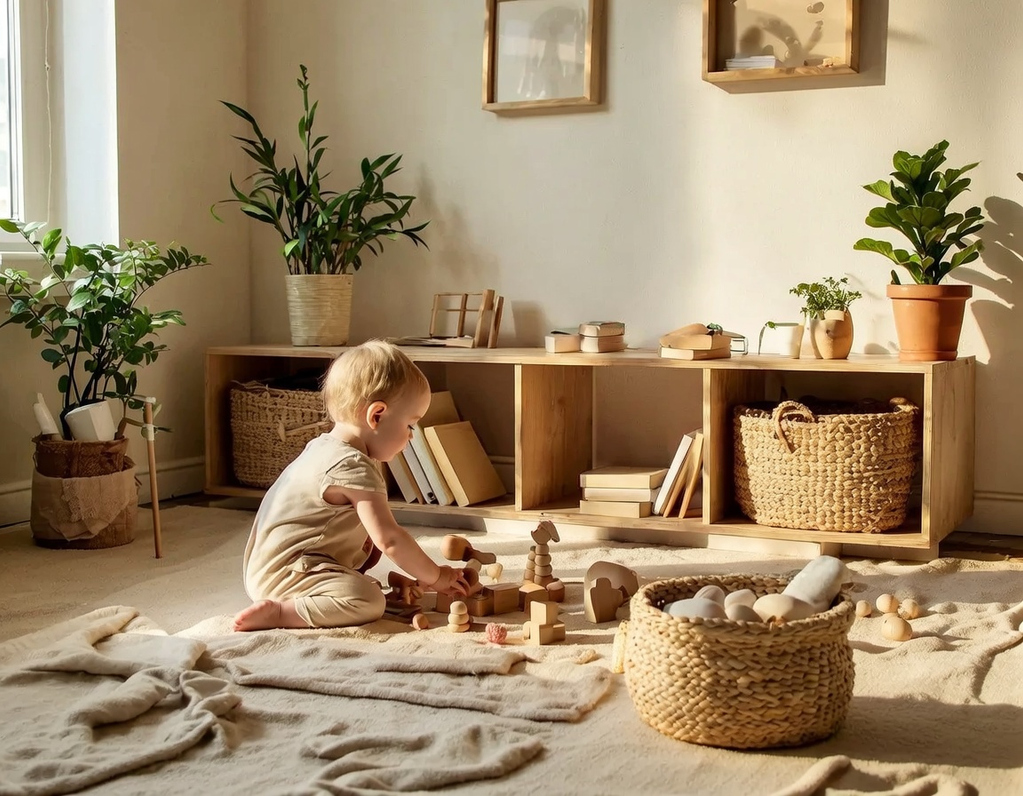
Play doesn’t have to mean constant entertainment. In fact, a Montessori routine often builds in short, dependable stretches of independent play so a child can focus, explore, and practise skills without being interrupted.
You can support this by:
- Keeping choices limited — a small toy rotation can feel calmer than a mountain of options.
- Using “yes spaces” — a safe area where your child can explore without you saying no every minute.
- Doing a brief “set-up” — put out two or three activities and then sit back.
- Balancing connection — a few minutes of joined play often makes independent play easier afterwards.
Creating simple bedtime routines that support better sleep
If you change only one part of your day, make it the bedtime routine. A calm bedtime routine helps children shift from stimulation to sleep, and it also helps you end the day feeling more settled.
Keep it short, repeatable, and realistic. Many families do best with a 20–40 minute bedtime routine, depending on age and temperament.
A simple bedtime routine might look like:
- Connection — a few minutes of play, a cuddle, or a recap of the day.
- Wash — bath or wipe-down, then teeth.
- Pyjamas and nappy — same order each night.
- Quiet cue — one or two books, a lullaby, or a short story you repeat often.
- Goodnight ritual — the same words, the same kiss, the same final step (lights, white noise, door position).
If you’re working on a baby routine and your evenings are unpredictable, aim for consistency in the last 10 minutes. Even when bedtime moves, the familiar pattern still supports sleep and reduces bedtime resistance over time.
How routines naturally change as babies become toddlers
One of the most reassuring things to remember is that routines are meant to change. A daily routine for babies can feel very “care-heavy” (feeds, nappies, naps). As babies become toddlers, routines slowly shift towards participation, independence, and clearer boundaries.
Common changes you might notice:
- Naps consolidate — multiple naps become one midday nap, then eventually quiet time.
- Meals become more structured — snacks and meals start to replace frequent milk feeds.
- Transitions need more support — toddlers understand “no” and may push back, so predictable steps matter even more.
- Language grows — you can explain routines and invite cooperation (“After lunch, we rest”).
If your toddler routine suddenly stops working, it doesn’t mean you failed. It usually means your child is developing — and the routine simply needs a small adjustment.
Encouraging independence with consistent routines (Montessori-inspired ideas)
A Montessori routine isn’t about doing more — it’s about setting up the environment and the rhythm of the day so your child can do more for themselves in small, age-appropriate ways. This supports confidence and reduces daily power struggles.
You can build independence into your parenting routines with small, practical tweaks:
- Make the next step obvious — keep nappies, wipes, bibs, and cups in predictable places so you’re not searching mid-routine.
- Offer tiny responsibilities — toddlers can put nappies in the bin, carry their cup to the sink, or choose pyjamas from two options.
- Use “slow hands” — demonstrate calmly, then pause and let your child try, even if it takes longer at first.
- Reduce unnecessary help — if your child can climb into the highchair safely or pull up trousers with support, let them practise daily.
- Keep routines consistent — repetition is what turns a skill into a habit.
Independence grows best when the routine is predictable and the expectations are kind. You’re not aiming for perfection — you’re creating a peaceful family life where everyone can contribute in a small way.
How visual routine cards help toddlers follow the day
Toddlers often struggle with routines not because they’re being “difficult”, but because the day feels abstract. Visual routine cards make the plan concrete. They also reduce how much talking and negotiating you need to do, which can make the whole home feel calmer.
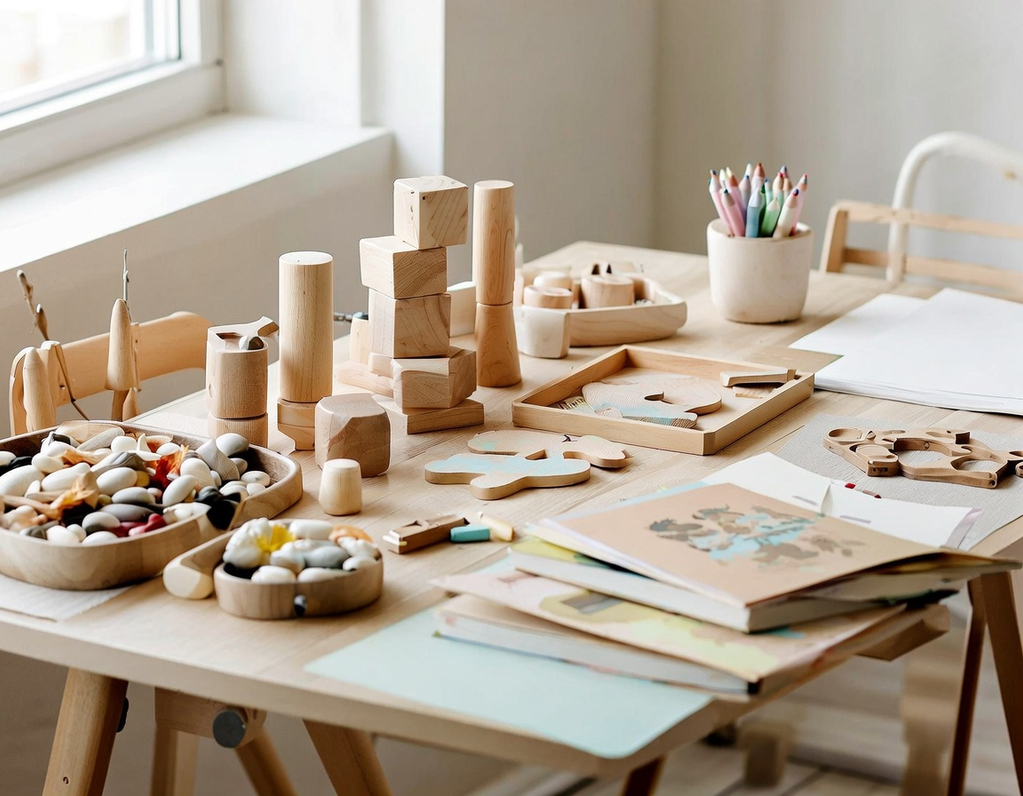
Visual routine cards are simply pictures showing the order of your toddler routine (for example: breakfast, get dressed, play, lunch, nap). You can draw them, print them, or use simple icons. Some families like to laminate printable routine cards and stick them to the fridge or a noticeboard.
Ways to use visual routine cards gently (without becoming rigid):
- Show, then tell — point to the next card and use a short phrase (“Now: teeth”).
- Keep it short — start with 4–6 cards for the main anchors, not the entire day.
- Let your toddler participate — they can turn over the card or move it to a “done” pocket.
- Use it for tricky transitions — mornings, leaving the house, nap wind-down, and the bedtime routine are great starting points.
If you enjoy thoughtful organisation, visual routine cards can pair well with simple storage labels or a basic weekly plan — helpful, not promotional, and easy to adapt as your child grows.
Tips for adapting routines during holidays, illness or developmental changes
The point of a family routine is to support your life, not restrict it. When things shift — travel, illness, new childcare arrangements, teething, dropping a nap — you can keep the comfort of routine by holding onto a few key anchors.
Try these realistic adjustments:
- Keep the bookends — protect your morning routine and bedtime routine even if the middle of the day is messy.
- Use a “minimum viable routine” — meals, naps/rest, outdoor time, and an early night if needed.
- Expect sleep to wobble — during illness or developmental leaps, focus on comfort and consistency rather than training tactics.
- Pack familiar cues — the same sleep sack, comforter, bedtime book, or white noise can keep the baby sleep routine familiar while travelling.
- Return gradually — once you’re home or well again, reintroduce your usual routine in small steps over a few days.
Common mistakes parents make when trying to establish routines
Many parents abandon routines because they think they’re “not working”, when really the routine is too complicated or too time-led. A simple baby routine or toddler routine should make your day feel easier, not tighter.
Common pitfalls to watch for:
- Trying to change everything at once — pick one anchor (often bedtime) and build from there.
- Over-scheduling — too many timed activities can create stress and backfire when a nap runs late.
- Expecting instant results — most parenting routines take 1–2 weeks of repetition before they feel natural.
- Too many choices — toddlers cope better with fewer options, offered calmly and consistently.
- Skipping transition cues — a 2-minute warning, a tidy-up song, or pointing to visual routine cards can prevent meltdowns.
- Assuming resistance means it’s wrong — toddlers often protest change even when it’s good for them; keep the routine kind and steady.
A simple example daily routine for babies
Every baby is different, so use this as a flexible pattern rather than a strict schedule. The times will vary based on age, feeding method, and nap needs — the order is the helpful part.
Example daily routine for babies:
- Wake and feed (milk)
- Nappy and get dressed (simple morning routine cues)
- Play and connection (floor time, a song, a short walk)
- Nap wind-down (same mini baby sleep routine each time)
- Nap
- Feed (milk) and nappy
- Play (a change of scene helps: outdoors, pram, or a different room)
- Next nap wind-down + nap (if age-appropriate)
- Afternoon feed and gentle play
- Early evening: calmer activity (bath, baby massage, dimmer lights)
- Bedtime routine + bedtime
If you’re building a baby routine from scratch, start by making the nap wind-down and bedtime routine consistent. The rest of the day often falls into place more easily once sleep cues are predictable.
A simple example daily routine for toddlers
A toddler routine usually works best with clear anchors: meals, outdoor time, rest, and a consistent bedtime routine. If your toddler attends nursery, you can still keep your home routine steady around it.
Example daily routine for toddlers:
- Wake, cuddle, and get dressed (morning routine sequence)
- Breakfast and wash hands/face
- Independent play set-up (two or three activities; Montessori routine style)
- Outdoor time or a morning outing
- Snack and a short reset (nappy/loo, drink, tidy-up)
- Lunch
- Nap or quiet time (even 30–60 minutes of rest helps)
- Afternoon play (creative play, helping with simple tasks, or a playdate)
- Dinner
- Bath/wash, pyjamas, teeth
- Books, cuddle, and bedtime routine to sleep
If transitions are a struggle, add visual routine cards for the key points (morning routine, lunch-to-nap, and bedtime routine). Many toddlers cooperate more when they can “see” the plan rather than hearing it repeated.
Conclusion: build your routine gradually and make it yours
The most effective parenting routines are the ones that fit your family — your child’s temperament, your energy, your work patterns, and the kind of home life you’re trying to create. A flexible baby routine or toddler routine isn’t about controlling the day; it’s about creating a calm rhythm you can return to.
Start small: choose one anchor (often bedtime), keep the steps consistent for a week, and then add another. Over time, your family routine will feel less like something you “do” and more like something that supports you — quietly, predictably, and with plenty of room for real life.