

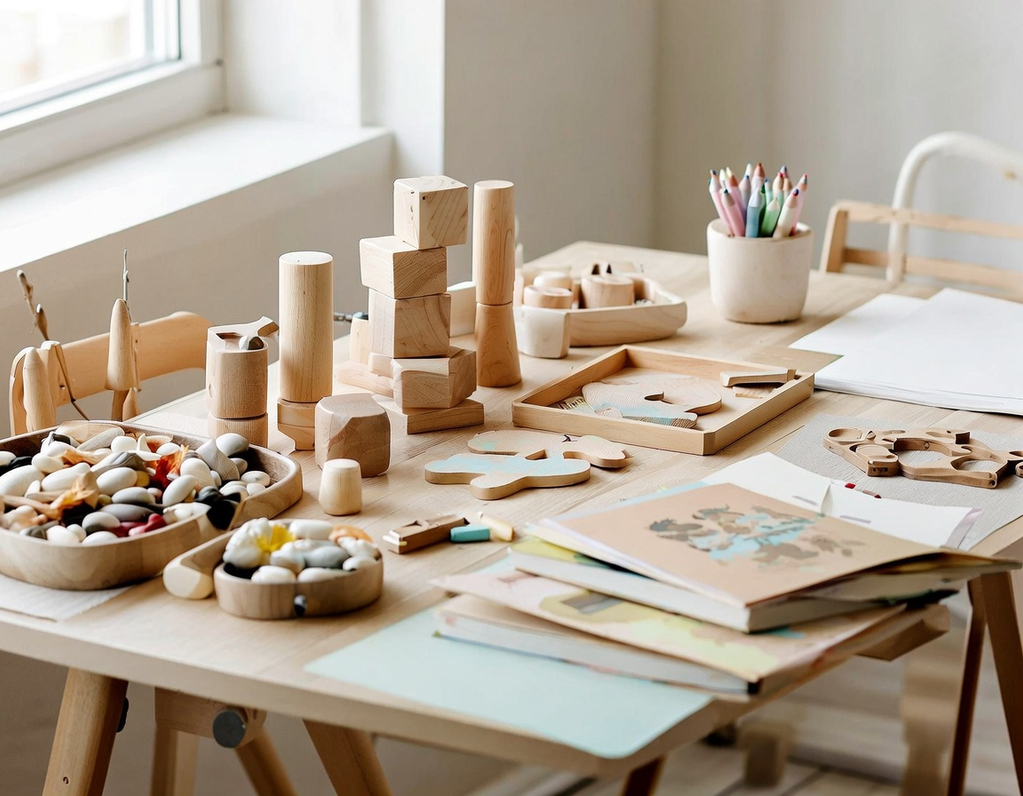

Screen-Free Play Ideas for Babies and Toddlers: Simple Activities to Encourage Learning
If you’ve ever caught yourself reaching for a screen “just for five minutes” so you can make a cup of tea, you’re not alone. Parenting little ones is full-on, and screens can feel like the quickest route to calm. But the good news is you don’t need elaborate setups (or endless energy) to offer rich, screen-free learning at home.
In this post, you’ll find simple, low-preparation screen-free activities for babies and toddlers that support learning through play, build independence, and invite creativity—using mostly everyday household items. Pick one idea, follow your child’s lead, and let “good enough” be more than enough.
Why screen-free play matters in the early years
Babies and toddlers learn best through real-life, hands-on experiences. When play is screen-free, children can move their bodies, explore materials, and practise the back-and-forth of communication—all building blocks for healthy development.
Screen-free learning supports early skills that grow quietly over time, including:
- Attention and focus — sticking with a task, noticing details, and returning to play after a wobble.
- Language development — hearing real words in context, copying sounds, and practising conversation rhythms.
- Motor skills — grasping, posting, pouring, stacking, climbing, scribbling, and coordinating both hands together.
- Problem-solving — experimenting, trying again, and learning what happens when you change one thing at a time.
- Emotional regulation — using play to reset, release tension, and feel capable in small ways.
Screen-free activities don’t have to be “educational activities” in the formal sense to be educational. When your child is absorbed in sensory play, building, pretending, or sorting, they’re doing the work of early childhood—learning through play in the most natural way possible.
Independent play, child-led learning, and a calmer home
Independent play doesn’t mean leaving your child to get on with it for long stretches. It’s the gentle skill of being able to explore for a few minutes (then a little longer), knowing you’re nearby. That confidence grows when play feels manageable and your child is trusted to choose what interests them.
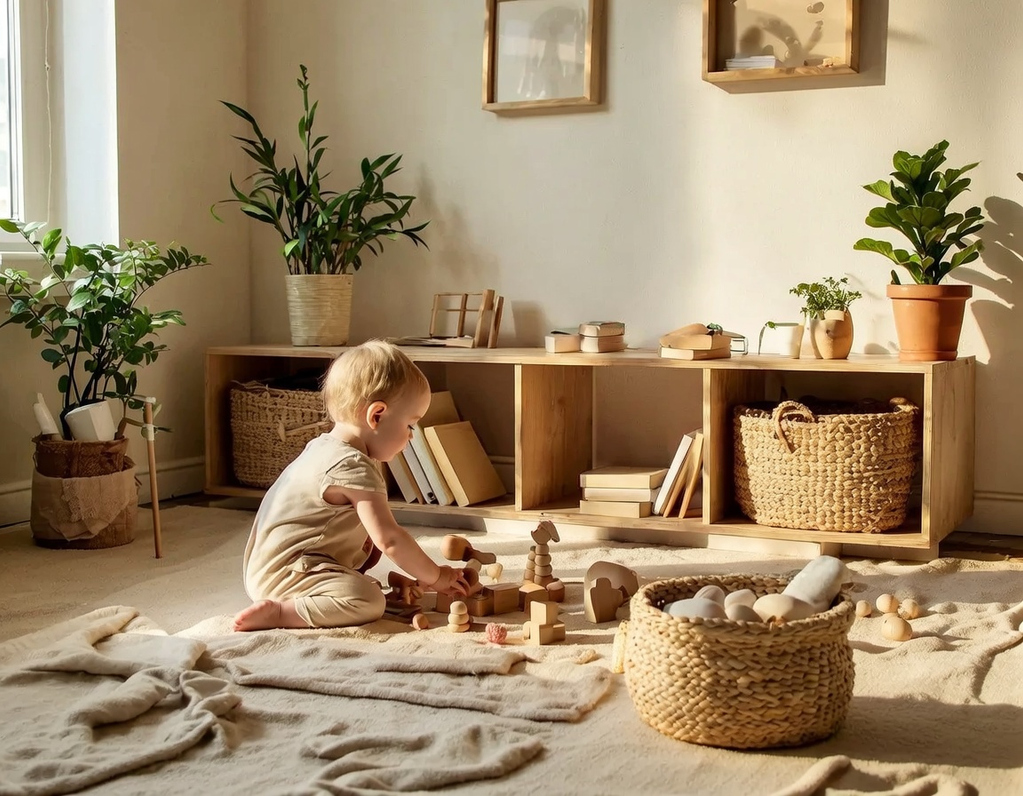
When you follow your child’s interests—cars, textures, posting things through holes, filling and emptying—you’re working with their development rather than trying to steer it. This is also where Montessori-inspired principles can support screen-free learning: simple materials, real-world tasks, and space to repeat activities without rushing them on.
A simple, calm play environment (with fewer distractions)
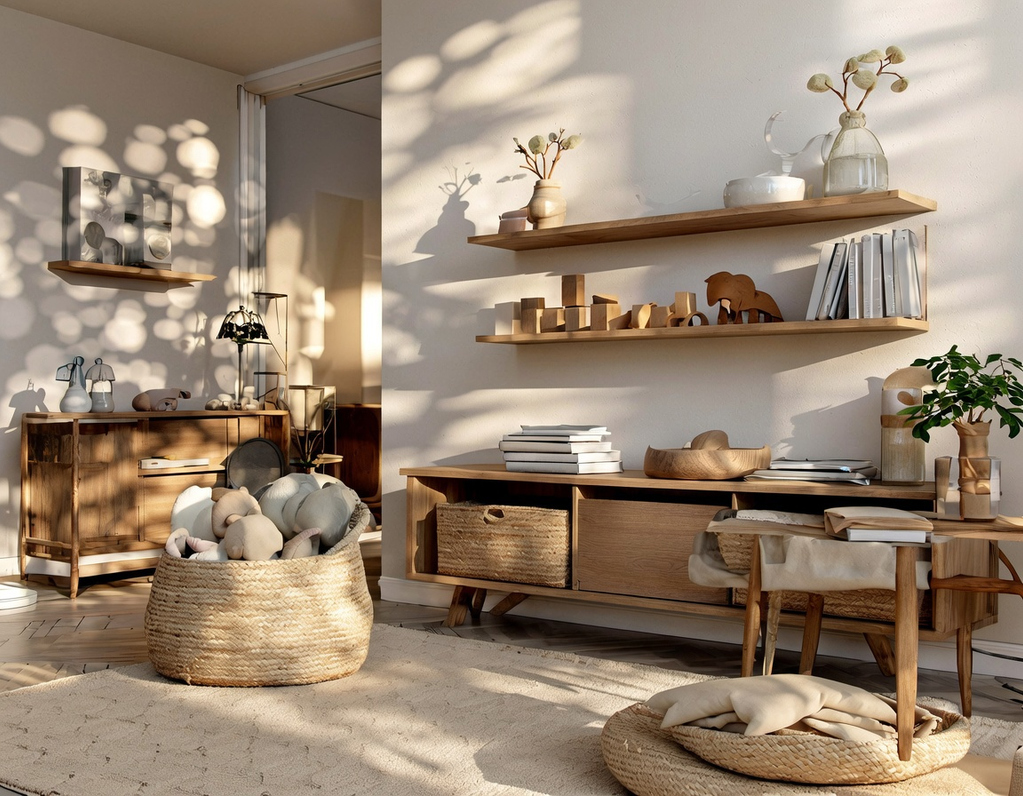
A calm play space can be small. What matters is that it feels predictable and not overwhelming, especially for little ones who are easily overstimulated.
- Keep out a small selection of toys and rotate the rest (more on this below).
- Choose a clear surface (floor space, a low table, or a play mat) so materials don’t get lost in clutter.
- Offer open-ended items (scarves, blocks, cups) alongside one “focused” activity (like posting or stacking).
- Try one activity at a time for younger toddlers—too many options can lead to flitting or frustration.
- Use a basket or tray so the activity has a clear beginning and end (helpful for tidy-up too).
If you’d like extra support, this is also a great place for printable activity resources—simple cards or checklists you can keep in a folder for those “what do we do now?” moments, without needing to plan from scratch.
Screen-free play ideas for babies (0–12 months)
Baby activities are most effective when they’re calm, sensory, and easy to repeat. Aim for short bursts, watch for tired cues, and remember that mouthing and banging are genuine learning at this age. These screen-free activities support sensory play, early language, and the beginnings of problem-solving.
- 1) Treasure scarf pull — fill an empty tissue box with clean scarves or muslins and let your baby pull them out one by one (talk about “in” and “out”).
- 2) Mirror chat time — sit together in front of a baby-safe mirror and copy your baby’s expressions and sounds (“You’re smiling! Hello!”).
- 3) Texture tummy-time trail — place a few safe textures within reach (a sponge, a wooden spoon, a soft brush) to encourage reaching and turning.
- 4) Sound shakers — seal dry rice or pasta in a small, sturdy container and shake to different rhythms; pause and wait for your baby to respond.
- 5) Peekaboo with a cloth — cover a toy (or your face) with a muslin and slowly reveal it; name what’s happening (“Where’s the bear? There!”).
Simple play ideas for toddlers (1–3 years)
Toddlers love to feel capable. The best toddler activities are often the simplest: something to carry, sort, pour, stack, or pretend with. These screen-free activities build independence while supporting fine motor skills, creativity, language development and problem-solving—without needing a big setup or expensive kit.
Fine motor and “busy hands” activities
- 1) Pom-pom transfer — use tongs or a spoon to move pom-poms (or cotton balls) between two bowls; count each one together.
- 2) Posting coins — cut a slot in a yoghurt tub lid and “post” large, safe tokens (card circles or chunky counters); empty and repeat.
- 3) Sticker peel and stick — offer a small sheet of stickers and paper; for younger toddlers, peel the edge for them to start.
- 4) Peg board on a tin — clip pegs around the edge of a sturdy tin or a piece of card; talk about colours as you go.
- 5) Threading with pasta — thread dried pasta onto a shoelace with the tip taped; make a “necklace” for a teddy.
Creativity and sensory play
- 1) Taste-safe yoghurt painting — use plain yoghurt with a drop of food colouring on a tray; finger paint and name the colours.
- 2) Playdough “bakery” — roll, pinch, and cut playdough; add a blunt butter knife and a muffin tray for pretend baking.
- 3) Bubble wrap stomping — tape a strip of bubble wrap to the floor and stomp, press, or roll cars over it for sensory feedback.
- 4) Ice rescue — freeze small plastic animals in an ice cube tray and “rescue” them using warm water and a spoon.
- 5) Colour hunt basket — choose one colour and collect matching items from around the room; line them up and name each one.
Language and early thinking (problem-solving)
- 1) Story stones — draw simple pictures on smooth stones (sun, cat, car) and take turns picking one to add to a made-up story.
- 2) “What’s missing?” tray — show 5 small objects, cover them, remove one, then ask which one is missing; keep it playful, not test-like.
- 3) Sorting tray — sort buttons (or safe large counters) into sections by colour or size; use an egg carton for ready-made compartments.
- 4) Tape road rescue — make a road with masking tape, add a bridge, and problem-solve routes for cars (“How can it get to the garage?”).
- 5) Simple puzzles from packaging — cut the front of a cereal box into 2–6 pieces and rebuild the picture; increase pieces as they grow.
Montessori-inspired principles for screen-free learning
You don’t need a fully Montessori home to borrow what works. Montessori activities often succeed because they’re simple, purposeful, and designed for hands-on independence.
- Keep materials minimal — one main task per basket helps your child know what to do straight away.
- Use real, functional items — a small jug, cloth, brush, or sponge invites careful movement and pride.
- Show, then step back — demonstrate slowly, use few words, and let your child repeat it their way.
- Respect repetition — if they want to pour for 15 minutes, that’s focus and learning through play (and through work).
If you like having a gentle plan, printable activity resources can help you match play ideas to your child’s stage—especially for independent play moments when you want a quick, screen-free option ready to go.
Outdoor play and nature-based learning (no big outing required)
Outdoor time doesn’t have to mean a day trip. A short step outside can reset everyone’s nervous system and open up fresh educational activities naturally: noticing sounds, watching clouds, feeling textures, and moving freely.
- Try a mini nature walk and collect “treasures” (a leaf, a stone, a feather) to talk about at home.
- Offer a bucket and brush to “paint” water onto fences or paving stones—mess-free sensory play that fades on its own.
- Make a listening pause: stand still for ten seconds and name what you can hear (bird, car, wind).
- Set up a mud kitchen corner with old utensils and a bowl—toddlers will stir, pour, and narrate their play for ages.
These small routines support screen-free learning while keeping the day calm and manageable.
Keeping it simple: rotation, organisation, and realistic expectations
One reason screens creep in is decision fatigue. A little thoughtful organisation makes screen-free activities easier to choose and easier to tidy away—without turning your home into a classroom.
Rotating activities to maintain interest
Rotation doesn’t need a strict schedule. It can be as simple as keeping most items out of sight and swapping a few when play starts to feel stale.
- Keep 4–8 options accessible (fewer for younger toddlers).
- Rotate one or two baskets every week, or whenever your child loses interest.
- Store refills (pom-poms, stickers, pasta for threading) in a small box so setting up takes under a minute.
- Repeat favourites without guilt—familiar play supports independent play and deeper learning.
Tips to keep activities affordable and enjoyable
- Start with what you have — cups, spoons, pegs, tape, bowls, scarves, and packaging are often enough.
- Keep cleanup in mind — put a towel under water play, and choose one “messy” activity per day (if any).
- Use short time windows — five calm minutes counts, especially with babies.
- Watch the child, not the clock — end while it’s still going well, so they want to return tomorrow.
Conclusion: choose connection and creativity over perfection
Screen-free play isn’t about doing more—it’s about making space for what already helps your child grow. A few simple play ideas, offered with calm consistency, can support language, fine motor skills, creativity, and problem-solving in a way that feels natural and reassuring.
Choose one activity, set it out with care, and let your child lead. Some days they’ll focus, some days they’ll flop, and both are normal. When you choose connection and creativity over perfection, you’re giving your child something lasting: the confidence to learn through play, without needing a screen to make the day work.
Continue the learning journey
Screen-free play doesn't need to be complicated. With the right activities and a little preparation, everyday moments can become opportunities for exploration, independence and learning.
Our Montessori-inspired printable resources provide simple, engaging activity ideas to help you create purposeful play experiences at home.
Explore the Sparrow & Seed collection on Etsy: https://www.etsy.com/shop/sparrowandseedfinds