


Toy Rotation Made Simple: Why Less Toys Can Mean More Play
If your child’s toys seem to multiply overnight, you’re not alone. Many families end up with a busy floor, a messy shelf, and a little one who flits from toy to toy without really settling.
The reassuring news: you don’t need a bigger house or a perfectly curated organised playroom to change this. With a simple toy rotation, you can offer fewer options at a time—without taking joy away—and often see more focus, creativity and independent play as a result.
In this guide, we’ll cover what toy rotation is, why it works, how to set up a calm system in any home (even if storage is tight), and a weekly checklist to keep things easy. Think: one small change, not a whole-life overhaul.
1) What toy rotation is (and why it works)
Toy rotation is simply a way of only keeping a selection of toys available at any one time, while the rest are stored out of sight and brought back later. You “rotate” what’s on offer—weekly, fortnightly, or whenever your child’s interest starts to dip.
Why does it work so well? Because children tend to play more deeply when there are fewer choices. When the shelf isn’t crowded, it’s easier to see what’s there, pick something, and stay with it for longer. You’re also using novelty in a gentle way: a toy coming back after a few weeks feels fresh again, without you buying anything new.
Toy rotation isn’t about strict rules, minimalism, or keeping things Instagram-perfect. It’s a practical method of toy organisation that supports calmer days and more satisfying play—for children and parents alike.
Calm parenting note — Rotating toys isn’t taking toys away “to teach a lesson”. It’s setting up the environment so your child can succeed: fewer decisions, clearer choices, and more time for play.
2) How too many toys can overwhelm children and reduce focus
When there are toys in every corner, children can look busy but feel unsettled. Too many options can create a “what next?” loop—start a puzzle, abandon it; tip out bricks, wander off; ask for a snack because play isn’t sticking.
This isn’t naughtiness or short attention spans. It’s often environmental overwhelm. A cluttered shelf can be surprisingly demanding: each toy is a tiny decision. Over time, that decision-fatigue can reduce concentration and make it harder for children to enter that lovely, absorbed state of play.
Another sneaky issue: when everything is out, nothing feels special. Pieces get lost, sets get mixed, and toys become background noise rather than invitations to explore.
3) The Montessori-inspired philosophy: fewer, carefully chosen activities
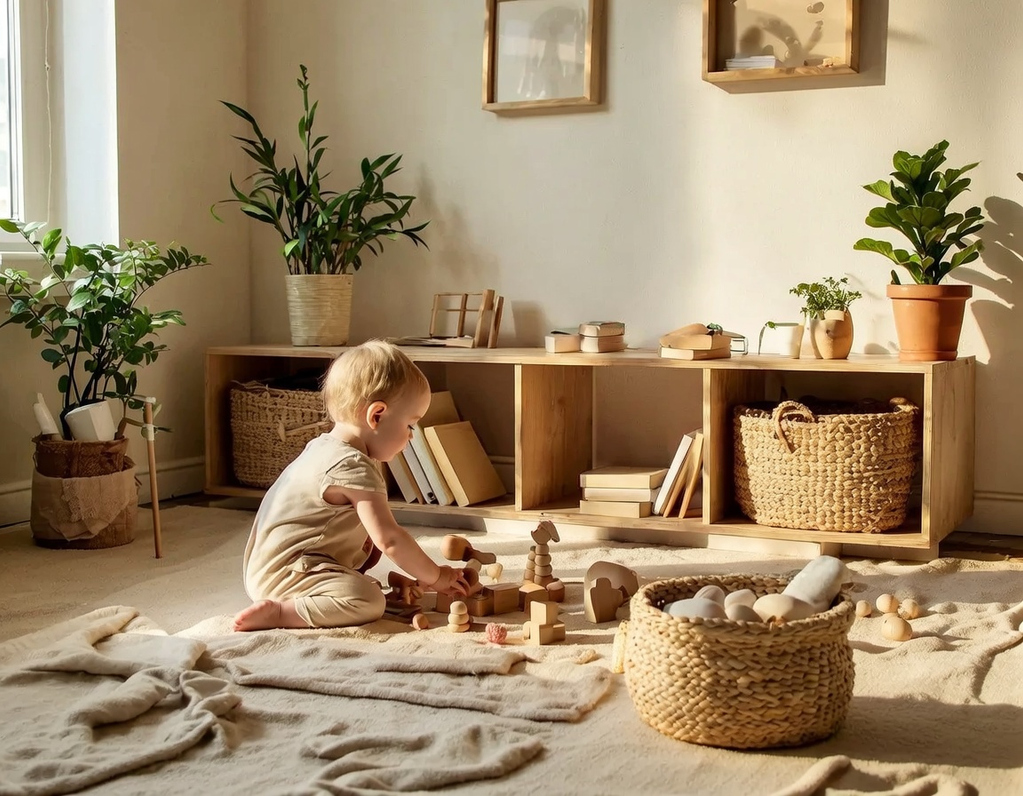
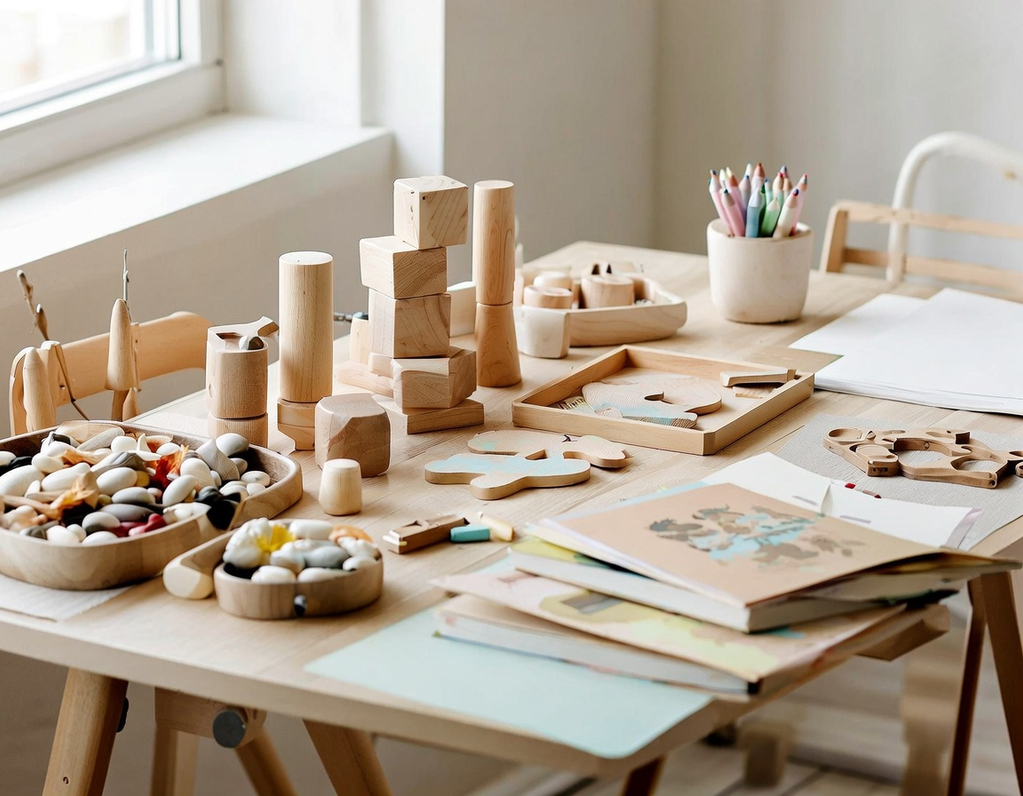
A Montessori-inspired home places a lot of value on the prepared environment—spaces that are orderly, beautiful in a simple way, and designed for independence. In Montessori settings, children are typically offered a small number of activities on low shelves. Each has a clear place, and each is chosen with care.
This doesn’t mean your home has to look like a classroom. The heart of Montessori toy rotation is the idea that children thrive when what you offer is:
- Visible — easy to see and choose without help.
- Manageable — not too many items to overwhelm or scatter everywhere.
- Purposeful — toys that invite building, pretending, creating, or practising a skill.
- Complete — sets with all the parts so play feels satisfying.
If you like the look of open baskets, wooden toys and tidy shelves—lovely. But the real goal is simpler: an environment that supports independent play and makes tidying up feel possible on an ordinary Tuesday.
4) The benefits of rotating toys (creativity, concentration, independent play)
When you practise decluttering toys from the play space (even temporarily), you often notice changes that feel almost immediate. Here are some of the most common benefits families report—and why they happen:
- More creativity — With fewer “single-purpose” toys out, children start using what’s available in flexible ways. A basket of animals becomes a shop, a rescue centre, a farm, and a story—sometimes all in one afternoon.
- Longer concentration — A calmer shelf reduces distraction. Children are more likely to finish a puzzle, build a taller tower, or stay in imaginative play for longer stretches.
- Stronger independent play — When toys are easy to access and reset, children can start play without you setting everything up. They also learn that they can put something away and choose another option by themselves.
- Easier tidy-ups — Less out means less to put away. This is a huge part of creating an organised playroom (or simply an organised corner of the living room).
- Better toy care — Rotations protect toys from constant wear, missing parts, and being overlooked. Everything gets a turn.
Practical example: if your toddler currently has 30 toys accessible, try putting out just 8–10 in clear “categories”: one building toy, one puzzle, one pretend-play option, a basket of books, and one simple “toddler play ideas” activity like posting, threading, or matching. Keep the rest in children’s toy storage and see what shifts over the next few days.
5) How to set up a simple toy rotation system in any home
You can create a toy rotation in a small flat, a shared bedroom, or a busy family living room. The system doesn’t need to be perfect—it just needs to be repeatable.
- Step 1: Choose your “play zone” — a shelf, a cupboard, a trolley, or even one basket per child. The goal is a consistent place where toys live when they’re “in play”.
- Step 2: Gather everything and sort quickly — group similar items (puzzles, vehicles, role play, arts & crafts). Don’t overthink it; this is about reducing visual clutter first.
- Step 3: Pick today’s selection — choose a small mix that covers different play needs: movement, building, creating, pretending, problem-solving, and books.
- Step 4: Store the rest out of sight — a lidded box, high cupboard, under-bed container, or wardrobe shelf. Out of sight is key for lowering “choice noise”.
- Step 5: Make tidy-up easy — each toy should have an obvious home. Baskets work beautifully here, especially if you add simple printable toy labels (pictures for toddlers, words for older children).
6) How many toys to keep out at one time (babies, toddlers, preschoolers)
There’s no magic number, but there is a sweet spot: enough variety to meet your child’s needs, not so much that play scatters and stalls. Use this as a starting point and adjust based on your child and your space.
Babies (0–12 months)
4–8 items
1–2 grasping toys, 1 rattle, 1 teether, 1 soft book, 1 ball, 1 cause-and-effect toy
Toddlers (1–3 years)
8–12 options
1 building set, 1–2 puzzles, 1 pretend-play set, 1 posting/matching activity, 1 vehicle option, books in a basket
Preschool (3–5 years)
10–16 options
More “projects”: construction, small world play, art tray, early games, role play, plus a few favourites that stay out
If this feels impossible because you have a lot of toys, remember: toy rotation starts with what you do next, not what you wish you’d done before. Even halving what’s currently out can bring relief.
7) The best storage ideas for rotated toys
The best storage is the kind you will actually use. Aim for “easy in, easy out” rather than perfectly decanted categories that fall apart after a long day.
Here are a few calm, practical ideas for children’s toy storage that support rotation:
- Clear lidded boxes — great for sets with multiple pieces (Duplo, train tracks, play food). You can see what’s inside without tipping everything out.
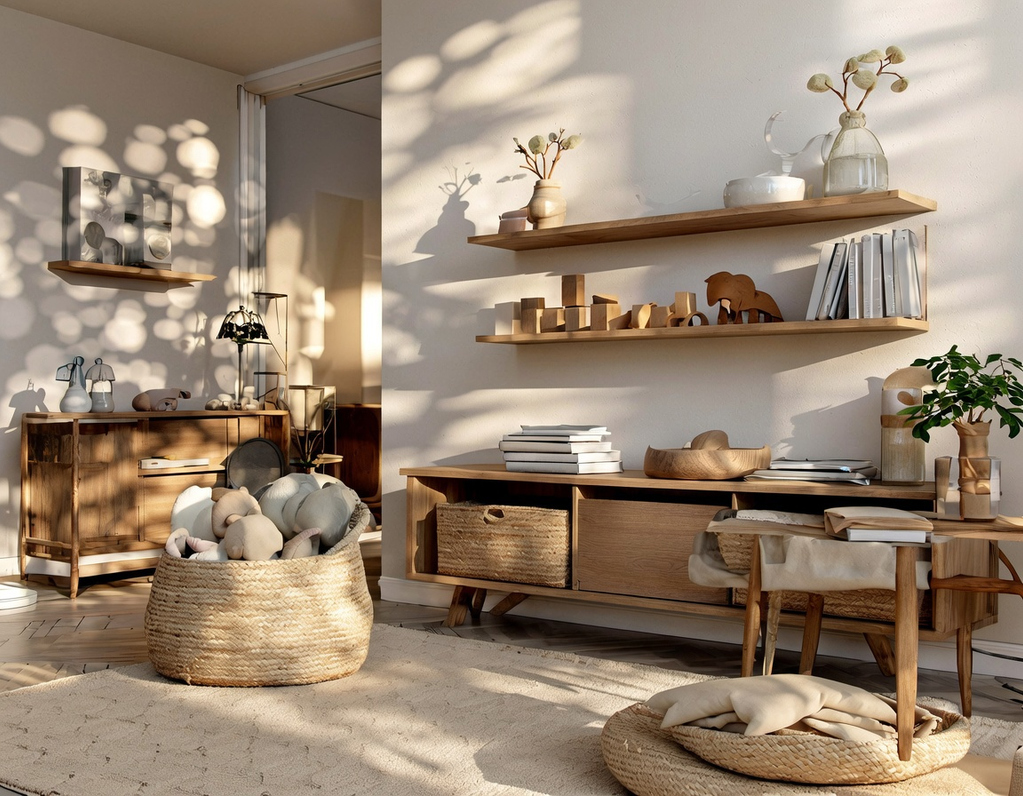
- Lidded baskets — softer-looking and quick to stash in a wardrobe or on top of a cupboard. Consider one basket per theme (e.g., “Animals”, “Pretend play”, “Puzzles”).
- Under-bed containers — perfect for small homes and shared rooms; rotate by sliding one box out at a time.
- Zip pouches inside a larger box — ideal for keeping puzzle pieces, card games, lacing sets or small parts together.
- A simple label system — a small label on the box front (words + picture) makes it faster to find and easier for children to help. This is where printable toy labels can be genuinely helpful, especially if you’re building routines slowly.
If you’re working towards an organised playroom, try keeping the “in play” toys on one low shelf and the rotated toys in one consistent storage spot. That way, rotation is swapping, not reorganising your whole home.
8) How often to rotate toys (and the signs it’s time)
Many families rotate weekly, but “right” depends on your child. A good starting rhythm is every 1–2 weeks. Babies may benefit from smaller changes more often; preschoolers might stay engaged for longer if you rotate by interest and projects.
Signs it’s time for a change:
- Toys are being tipped out more than they’re being used (lots of dumping, little playing).
- Your child says “I’m bored” quickly, even after you’ve offered ideas.
- Play feels scattered — lots of starting, little finishing.
- Tidy-up feels impossible because there’s simply too much out at once.
- You notice “invisible toys” — things that are technically available but never chosen because they’re buried or crowded out.
One more gentle sign: if you feel irritated every time you walk past the play area, it’s often your cue that the environment needs adjusting. Toy rotation is a form of calm, practical toy organisation—and your nervous system matters too.
9) Mistakes parents commonly make (and how to avoid them)
Toy rotation works best when it’s simple. These are the most common pitfalls—and easy ways to sidestep them without striving for perfection.
- Rotating too much at once — If every single toy changes, children can feel unsettled. Try: keep 1–3 steady favourites out (a comfort toy, a beloved set of vehicles, a doll), and rotate the rest.
- Keeping broken or incomplete toys in the mix — Missing pieces can sabotage play and cause frustration. Try: do a quick “complete set” check before a toy returns to the shelf.
- Making rotation a big weekend project — If it takes two hours, you won’t keep doing it. Try: aim for a 10-minute reset while the kettle boils or after bedtime.
- Rotating only by age, not by interest — A child might ignore a “perfectly educational” toy and obsess over animals for weeks. Try: follow what they’re drawn to and build rotations around that interest (this is where “toddler play ideas” can be as simple as changing the theme of the same materials).
- Using toy rotation as a punishment — Taking toys away when a child struggles creates tension. Try: keep rotation neutral: “I’m putting a few things away so it’s easier to choose.”
- Buying more storage before simplifying — Containers can help, but they won’t fix too much stuff. Try: do a light round of decluttering toys first: donate duplicates, recycle broken items, and store “not right now” toys out of the play zone.
10) A simple weekly toy rotation checklist
Use this as a gentle routine you can repeat. If you like structure, you could keep it printed inside your toy cupboard, or pair it with a simple family routine resource (morning/after-school reset) so it becomes automatic over time.
- Reset the shelf: return toys to their places, remove anything broken or incomplete.
- Notice what’s working: which toys were used most? Which were ignored?
- Choose 2–4 swaps: rotate a small number rather than everything.
- Balance the mix: include one creative option, one building option, one problem-solving option, and books.
- Refresh the “yes space”: keep the play area clear enough that your child can spread out comfortably.
- Label and store: place rotated toys into baskets/boxes and add or update labels (printable toy labels are especially helpful if you’re sharing storage across siblings).
- Do a quick safety/age check: especially for baby toys and small parts.
- Plan one easy invitation to play: e.g., set out a puzzle on a tray, put crayons and paper in a basket, or place animals with a small cloth “field”.
Conclusion: start small, not perfect
If toy rotation feels like “one more thing”, start with the smallest step that will genuinely help. Put half the toys into a box, store it out of sight, and leave a calmer selection available. That alone can change the feel of your home—and your child’s play—this week.
Over time, you can refine your toy rotation into something that suits your family: a gentle Montessori-inspired approach to toy organisation, a calmer rhythm of independent play, and a more peaceful, functional space. One small change is enough to begin.